
Hey there! Today I want to talk about something many of us have experienced but seldom pause to think about, the moment an ad grabs your attention, but the user experience that follows doesn’t quite live up to that initial spark.
Recently, I found myself hooked by a simple Instagram ad for banana-flavored ice cream. Real fruits, real milk, no preservatives. That banana flavor was a rarity and immediately piqued my curiosity. I went from casual scrolling to genuine excitement in seconds, clicked through, and started exploring the options. But when I tried to place an order, the crushing message appeared: “Not serviceable in your area.” My craving was met with a dead end.

The product didn’t fail, the experience did
The product itself was spot on. The ad created interest, made me want to try something new. But the experience that followed felt like a broken promise. The excitement generated by the ad wasn’t matched by a clear pathway to actually enjoy the product. This is a classic clash where marketing and user experience fail to align.
Why This Experience Stings More Than It Should? Food cravings are often impulsive. When you see something appealing, you want it immediately. The ad did its job perfectly by creating desire. But the delay in revealing the constraints shattered the momentum. It left a gap between expectation and reality and that gap is where frustration lives. It’s disappointing because it colors how I see the brand. Not as careless on purpose, but as someone who didn’t fully think through what it means to truly serve me as a user.
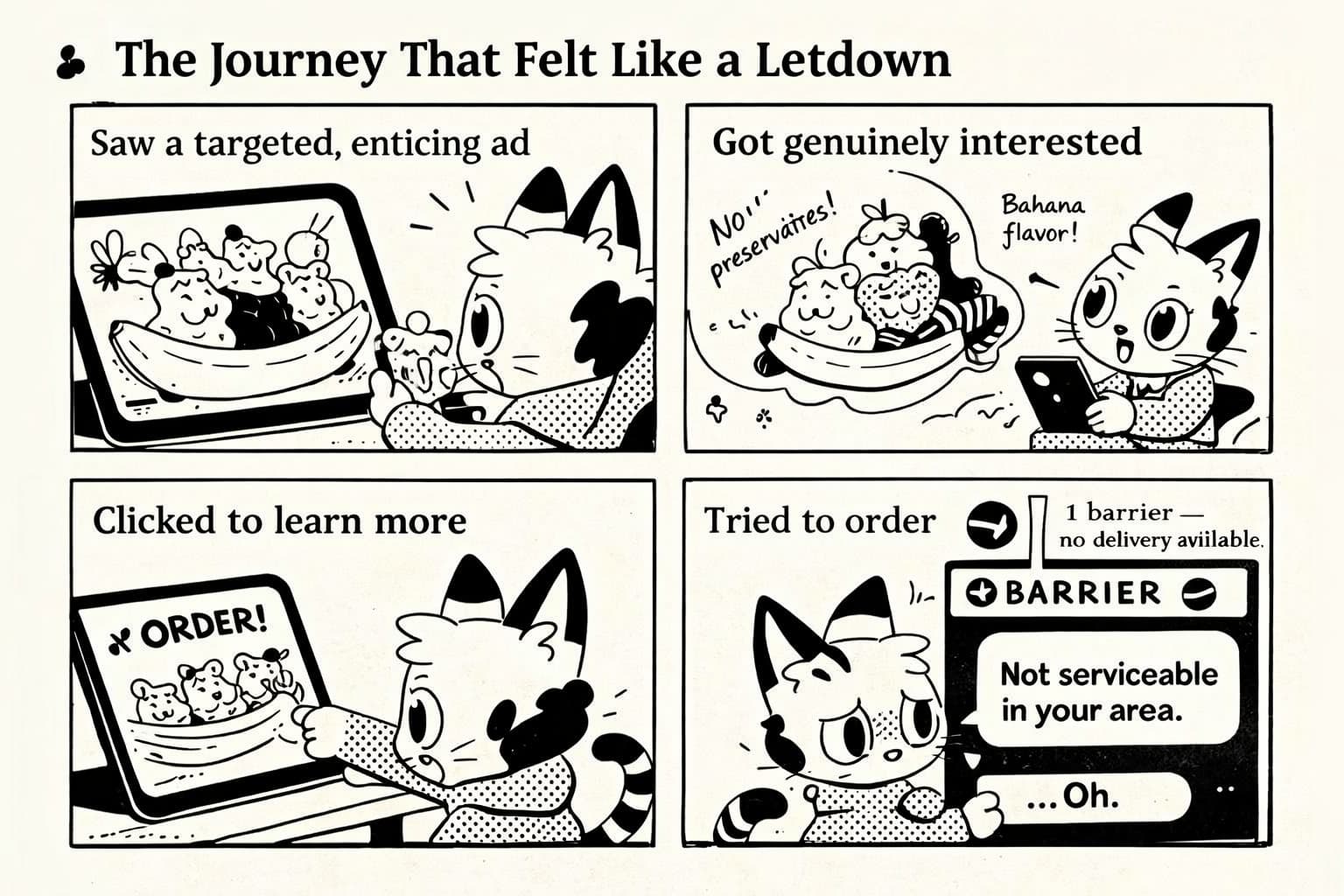
Three main problems crop up in these scenarios:
- Targeting Without Full Context
Ads hit the right audience but ignore constraints like location or inventory. - Late Discovery of Limits
Key details like service area or stock status appear too late, after the user has already engaged. - No Plan B or Recovery
When the offer isn’t actually available, there is no effort to keep the customer interested or suggest alternatives.
This happens beyond food too
- A stunning sofa ad that only ships to select cities
- A fashion promo where your size is sold out
- An app full of promise but not available in your country
How to make this experience better
Small but thoughtful changes can save the day:
- Set Clear Expectations from the Start
Show upfront if a product or service is limited by location or availability. - Check Availability Early
Use location or zip code info before users dive deep, so they aren’t wasting time. - Turn a No Into a Maybe
If the product isn’t available, offer to notify the customer when it is, invite them onto a waitlist, or suggest nearby pick up options.
Aligning attention with fulfillment
This story isn’t just about ice cream. It highlights a common disconnect between marketing and UX. Advertising aims to capture interest and clicks. UX is about guiding users successfully through an experience that builds trust. When these two aren’t in sync, the gaps don’t just cause drop-off. This creates a negative brand memory.
Great ads get us excited, but great user experiences deliver on that excitement. When there’s a mismatch, users don’t just walk away they feel let down. As designers and creators, our responsibility is clear: if we promise something, we must make it genuinely accessible and enjoyable. Because once a user feels disappointed, no product, however good, will easily win them back..
Thanks for reading. If you’ve ever stumbled across an experience like this, I’d love to hear your story. I’ll be sharing tips on designing for honest communication in digital products soon, something I believe can change moments like these for the better. Until then, keep questioning what promises you make and how you make them real.
Leave a Reply